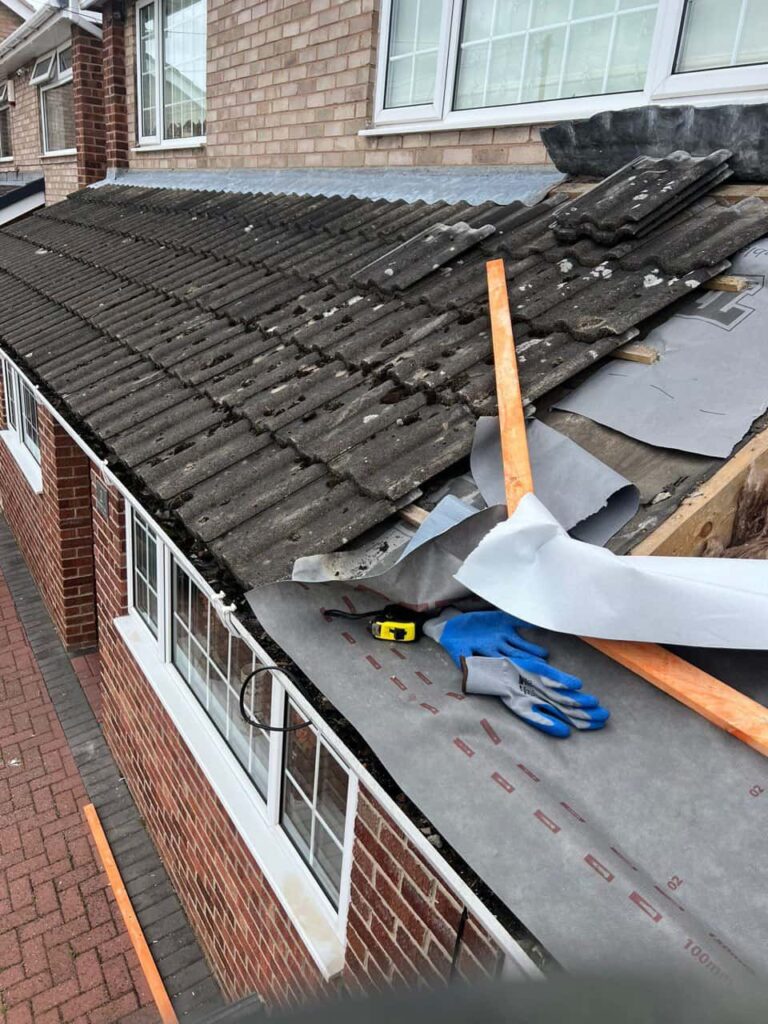
A small roof leak may not seem particularly urgent, especially if it only produces an occasional damp patch or a minor water stain on the ceiling. However, even a relatively small opening in the roof can allow moisture to enter the building repeatedly. If the underlying defect is not identified and repaired, water can gradually affect insulation, roof timbers, plasterwork and other structural components.
For homeowners in Dinnington, South Yorkshire, recognising the early signs of roof leaks is important for protecting the condition of their property. Understanding how moisture spreads and why seemingly minor defects can become more serious helps explain the importance of arranging roof repairs promptly.
How Water Enters Through Small Roof Defects
Roof leaks can develop for several reasons, including cracked or displaced tiles, damaged flashing, deteriorating roof coverings and failing seals around roof penetrations.
These defects do not always create an obvious opening. Water may enter through a small gap during rainfall and travel beneath tiles or along roof timbers before becoming visible inside the property.
This means the location of a damp patch or ceiling stain may not correspond with the actual source of the leak. A proper inspection is therefore essential to identify where water is entering and determine the extent of the affected area.
Moisture Can Gradually Damage Roof Timbers
One of the more serious consequences of an untreated roof leak is damage to the timber structure. Roof timbers are designed to remain relatively dry, but repeated exposure to moisture can cause them to deteriorate.
Prolonged dampness may encourage timber decay, particularly where ventilation is poor and moisture cannot escape effectively. As the condition worsens, affected rafters, battens and other supporting components may lose strength.
The longer water is allowed to enter, the greater the possibility that repairs will involve more than simply replacing a damaged tile or sealing a small opening.
Wet Insulation Becomes Less Effective
Roof insulation helps regulate indoor temperatures by reducing unwanted heat transfer. When water enters the roof space, insulation materials can become damp and lose some of their effectiveness.
Wet insulation may also take a long time to dry, particularly in poorly ventilated loft spaces. If moisture remains trapped, it can contribute to persistent damp conditions and affect nearby timber and internal surfaces.
A roof leak should therefore be investigated even when there is no obvious damage to the ceiling below. Problems within the loft may already be developing before they become visible in living areas.
Damp Can Spread Into Ceilings and Internal Walls
Water does not always remain directly beneath the point where it enters the roof. It can travel along structural components, soak into plasterboard and spread through adjoining materials.
Initially, homeowners may notice a small discoloured patch, peeling paint or a slight bubbling of the ceiling finish. Over time, continued moisture exposure can cause plasterwork to weaken, sag or deteriorate.
In more persistent cases, dampness may extend towards upper walls and surrounding fittings. This can make the affected area larger and more disruptive to repair.
Persistent Moisture Can Encourage Mould Growth
Damp conditions provide an environment in which mould can develop, particularly where affected materials remain wet and airflow is limited.
Mould may appear as dark spotting on ceilings, walls or timber surfaces. A musty smell in an upstairs room or loft can also indicate that moisture is accumulating somewhere within the building.
Although cleaning visible mould may improve the appearance temporarily, it will not resolve the underlying problem if water is still entering through the roof. The source of the leak needs to be addressed to prevent the damp conditions from continuing.
Small Leaks Can Become More Difficult to Locate
A roof leak that is left untreated can affect several layers of the roofing system. Water may move away from the original entry point, making it harder to establish where the problem began.
For example, a damaged section of flashing may allow water to enter and travel along the roof structure before appearing as a stain in a bedroom ceiling. Repairing only the visible internal damage would leave the original defect unresolved.
A professional roof inspection considers the surrounding tiles, flashing, roof joints and internal roof space to identify the cause rather than simply treating the symptoms.
Why Prompt Roof Repairs Matter
Addressing a small roof defect early can help prevent moisture from affecting larger sections of the property. The appropriate repair will depend on the roofing material, the location of the damage and whether water has already reached the underlying structure.
Dinnington Roofing Repairs can help homeowners in Dinnington, South Yorkshire, identify the cause of roof leaks and assess the condition of affected areas. Whether the issue involves slipped tiles, damaged flashing or deteriorating roof coverings, a thorough inspection helps establish the work needed to restore the roof’s protection.
It is also sensible to arrange an assessment if damp patches repeatedly return after rainfall or previous repairs have failed to resolve the problem.
Conclusion
Small roof leaks should never be dismissed simply because the visible damage appears minor. Continued water ingress can weaken roof timbers, reduce insulation performance, damage ceilings and create conditions that encourage mould growth.
For property owners in Dinnington, South Yorkshire, dealing with roof defects promptly can help prevent more extensive deterioration and protect the building over time. Contact Dinnington Roofing Repairs to discuss your concerns and arrange a professional roof inspection.
Call us on: 01909 498 195
Click here to find out more about Dinnington Roofing Repairs
Click here to complete our contact form and see how we can help with your roofing needs.